
Safety
How to Spot Counterfeit Chinese Yuan Banknotes
Learn the tilt, light and touch tests, plus key differences between the 2005, 2015, 2019 and 2020 renminbi banknote editions.
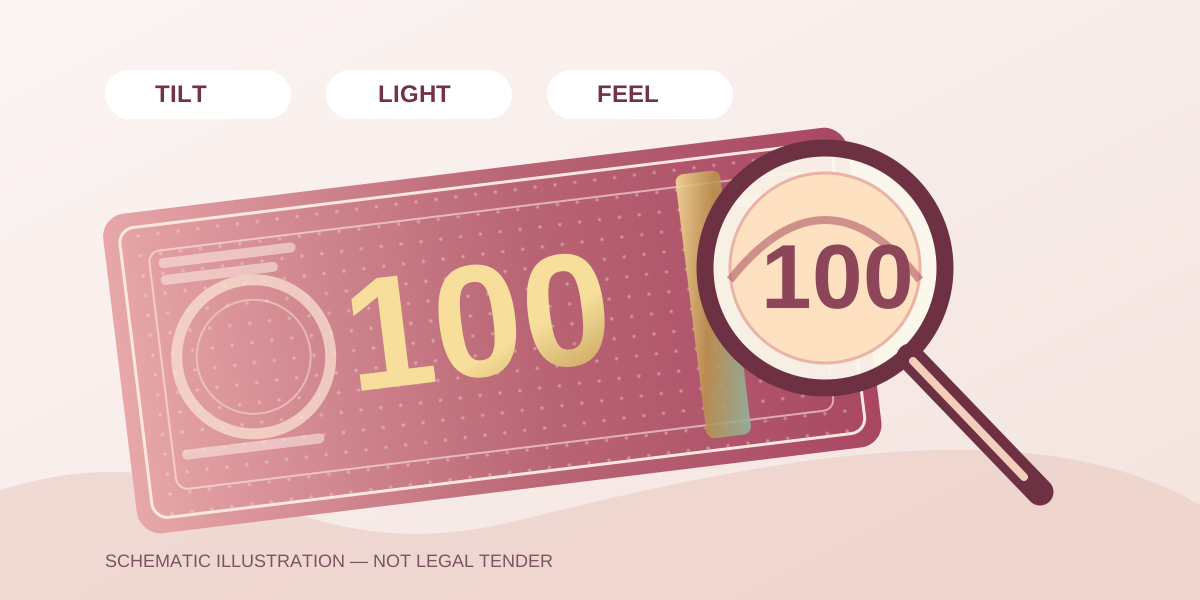
Chinese renminbi (RMB) banknotes contain several security features. Knowing how to recognise them can help you check cash received during a person-to-person exchange.
Know which edition you have
The fifth series of RMB banknotes includes different editions. Common examples are:
- 2005: ¥100, ¥50, ¥20, ¥10 and ¥5.
- 2015: ¥100.
- 2019: ¥50, ¥20, ¥10 and ¥1.
- 2020: ¥5.
Genuine earlier notes may also circulate. An older appearance does not automatically mean a banknote is fake. Check the denomination and edition before comparing security features.
Three simple checks: tilt, light and feel
Tilt: Many RMB notes show colour-changing numerals or security strips. On the 2015 ¥100, the central “100” changes between gold and green, with a moving light effect.
Light: Hold the note up to the light and examine its watermarks and see-through patterns. Features vary by edition and denomination.
Feel: Genuine notes generally have areas of raised printing, including certain lettering and design elements. Ordinary flat printing can be a warning sign, but wear may reduce the texture.
No single feature proves authenticity. Use several checks together.
The 2015 ¥100 note
The 2015 edition has a large gold-to-green “100” on the front, a colour-changing strip on the right, a Mao Zedong portrait watermark, a separate white “100” watermark, raised printing and both horizontal and vertical serial numbers.
The 2005 ¥100 note
The older edition has a smaller colour-changing “100” near the lower-left side, a windowed holographic security thread, watermarks and textured printing. It normally has a single horizontal serial-number location. Do not reject an authentic 2005 note simply because it lacks a security feature introduced in 2015.
The 2019 ¥50, ¥20, ¥10 and ¥1 notes
The updated ¥50, ¥20 and ¥10 notes have optical security features including a colour-changing central denomination numeral. Look for appropriate watermarks and security-strip effects. The 2019 ¥1 note does not have all the features of the higher denominations; its floral and denomination watermarks and printing details are more relevant.
The 2020 ¥5 note
The redesigned ¥5 note features a large colour-changing central 5, along with watermarks and see-through elements. Its security features differ from those of the 2005 ¥5 note.
Warning signs
- Blurry or uneven printing and poorly defined fine patterns.
- Missing, surface-printed or incorrectly positioned watermarks.
- Colour-changing effects that do not match the correct edition.
- Unusually flat printing in areas that should have raised texture.
- Serial-number or security-strip layouts inconsistent with the note.
Genuine notes can be worn or damaged. Detection pens, UV lights and phone apps are only additional aids, not definitive tests.
What if a note looks counterfeit?
Do not spend or exchange a note you suspect is counterfeit. If you are still meeting the other person, decline the note and stop the transaction if necessary. If you already have it, retain relevant details and ask the police or an appropriate financial institution for advice.
See the People's Bank of China's banknote information and our cash exchange safety guide.
Final advice
Tilt it, hold it to the light, feel it and check the edition. When in doubt, obtain professional verification rather than risking a counterfeit.